When you look at students who consistently perform at the top of their LLB cohort, the difference is rarely raw intelligence. It is almost always methodology.
First-class students have developed specific habits — ways of engaging with material, managing their time, and preparing for exams — that compound over months of study and produce significantly better results come examination day.
Here are the five habits that matter most.
Habit 1: They study with the examiner’s report open
Most students read their textbook and subject guide and consider that revision. First-class students read the examiner’s report alongside every topic they revise.
The University of London publishes detailed examiners’ reports after every examination session. These documents tell you exactly what the common errors were, what the question was looking for, and what distinguished a strong answer from a weak one. They are written by the people who will mark your paper.
Reading three years of examiners’ reports for a subject takes approximately two hours. That two hours is among the highest-return revision time you can spend. It calibrates everything else you do.
Habit 2: They write before they feel ready
A very common pattern among underperforming students is this: they revise extensively, feel they need to know more before attempting a past paper, revise more, and then attempt past papers in the final week before the exam with very little time to improve.
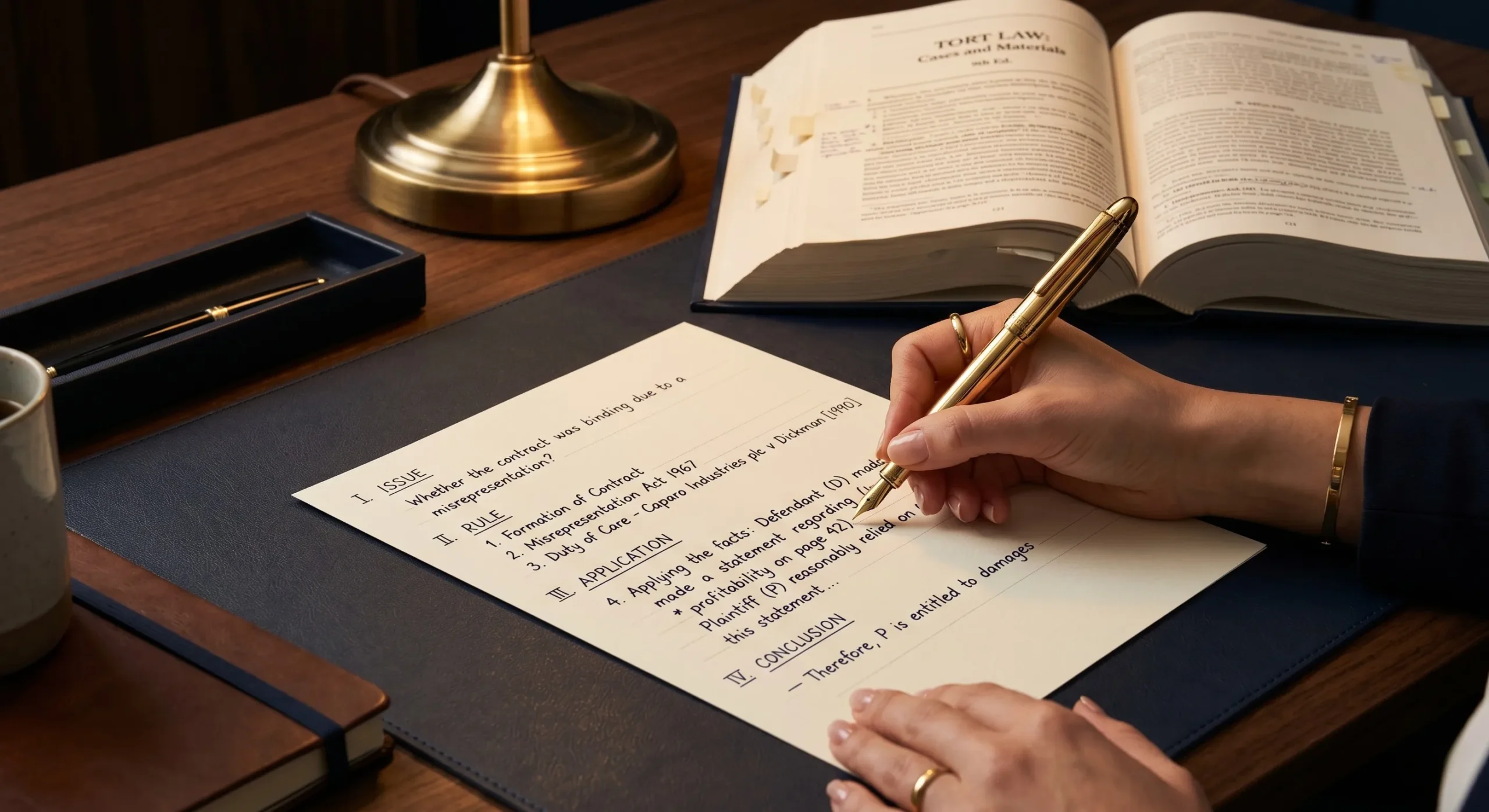
First-class students begin writing past paper answers early — often when they feel only 60% prepared. This is intentional. Writing an answer when your knowledge is incomplete forces you to identify exactly what you don’t know. It is far more efficient than passive re-reading.
The discomfort of an incomplete answer is useful information. It tells you precisely where to focus next.
Habit 3: They build a case bank, not just notes
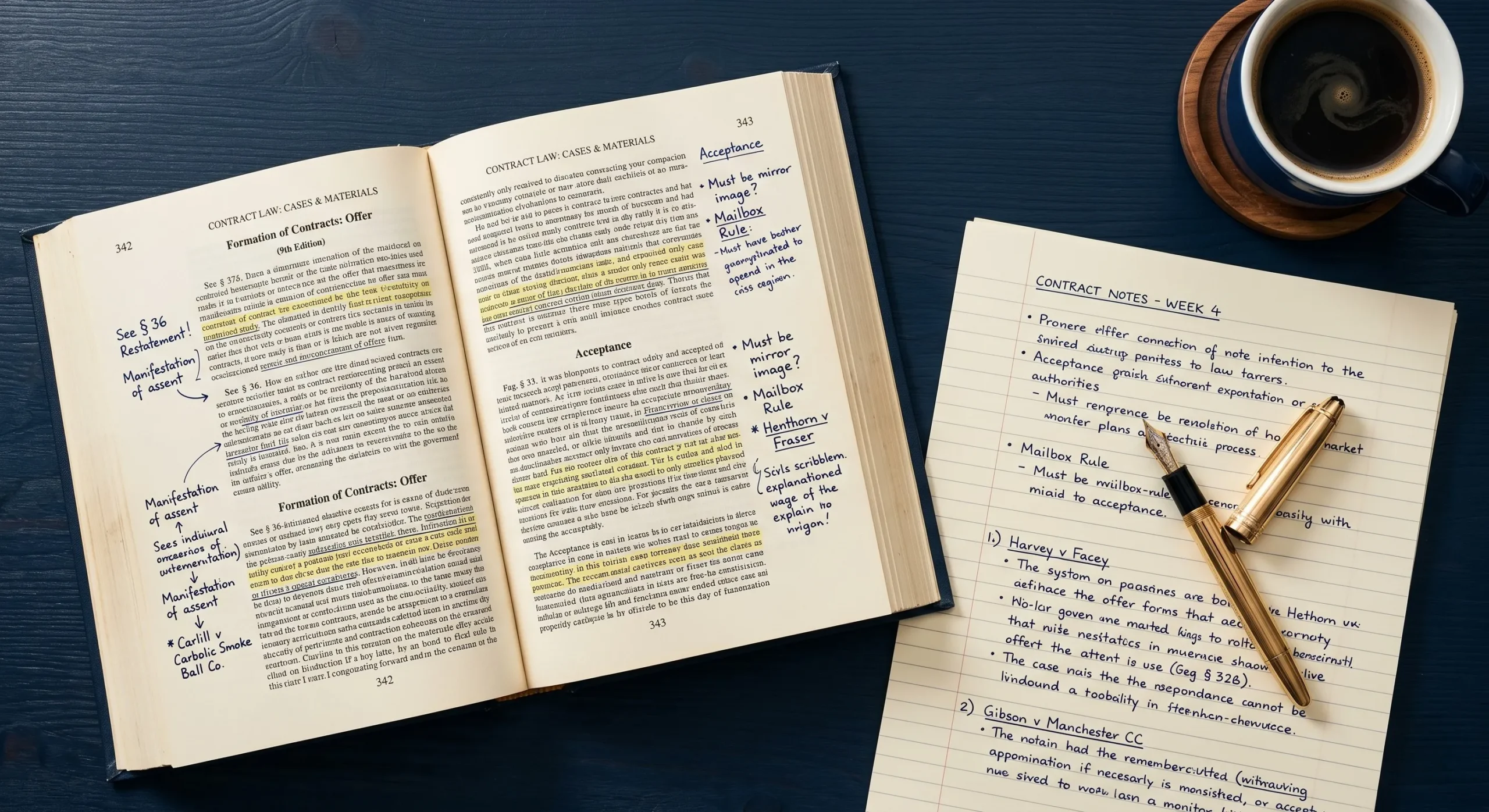
There is a difference between knowing that a case exists and being able to deploy it precisely under exam conditions. First-class students maintain a case bank — a structured document where each case is recorded with three elements: the facts in one sentence, the legal principle established, and the specific context in which it should be cited.
This is not a substitute for understanding the cases. It is a tool for making that understanding exam-ready. In a three-hour paper, the ability to recall a precise legal principle under pressure is a skill that must be trained deliberately.
Habit 4: They manage topics, not hours
Students who measure their revision by hours — “I studied for six hours today” — often have very little to show for it. Hours spent re-reading, highlighting, and passively reviewing material feel productive but produce limited retention.
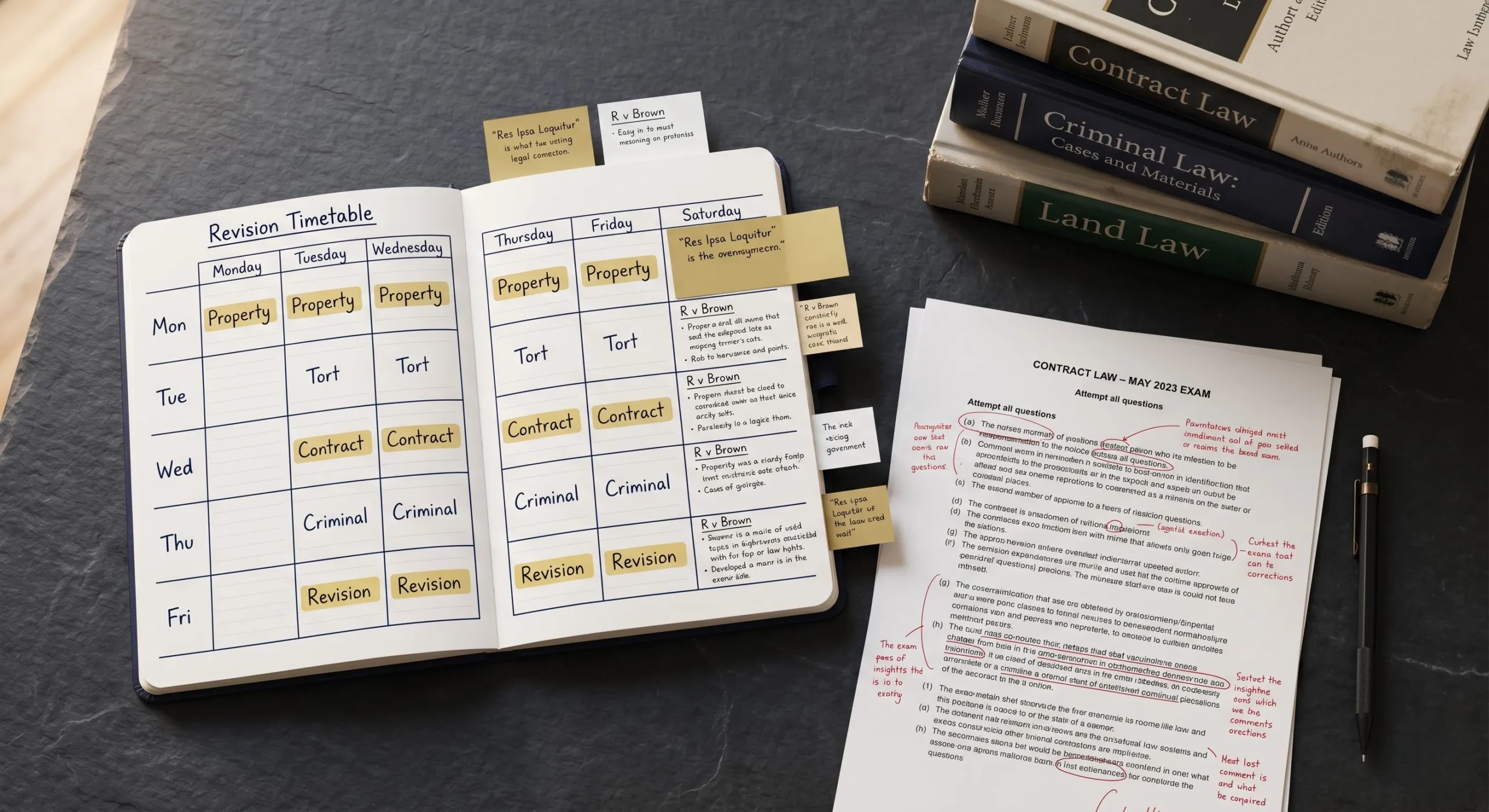
First-class students measure revision by topics completed and questions answered. A productive session ends with: one topic revised actively, one past paper question attempted, and one set of errors identified and corrected. That might take two hours or five hours — the time is not the metric.
Structure your revision around output, not input.
Habit 5: They treat feedback as the primary learning tool
The most accelerated learning in exam preparation does not happen during revision. It happens in the gap between what you wrote and what the model answer or examiners’ report says you should have written.
First-class students close this gap systematically. After every practice answer, they compare their response to the expected answer, identify every point they missed or misapplied, and add those gaps to a running list of priorities. They then re-test themselves on those specific points before moving on.
This feedback loop — attempt, compare, identify gaps, re-test — is the mechanism through which exam technique actually improves. Students who skip it are essentially practising the same errors repeatedly and expecting different results.
The common thread
Each of these five habits shares a common feature: they are active, not passive. First-class students are not necessarily more disciplined or more naturally gifted. They have simply replaced passive revision with active, feedback-driven preparation.
You can begin implementing all five of these habits in your next study session. The results will not be immediate — but over weeks and months, they compound into the kind of performance that earns a first.