The University of London LLB International Programme is one of the most widely taken law degrees in the world. Students from over 100 countries — including Pakistan, Nigeria, Malaysia, Ghana, Sri Lanka, and the UAE — use it to earn a respected British law degree without relocating to the United Kingdom.
But for many students, especially those studying independently, the programme can feel isolating and confusing. The reading lists are long, the examiner expectations are high, and there is very little structured guidance on how to actually prepare for the exams.
This guide covers everything you need to know.
What is the University of London LLB International Programme?
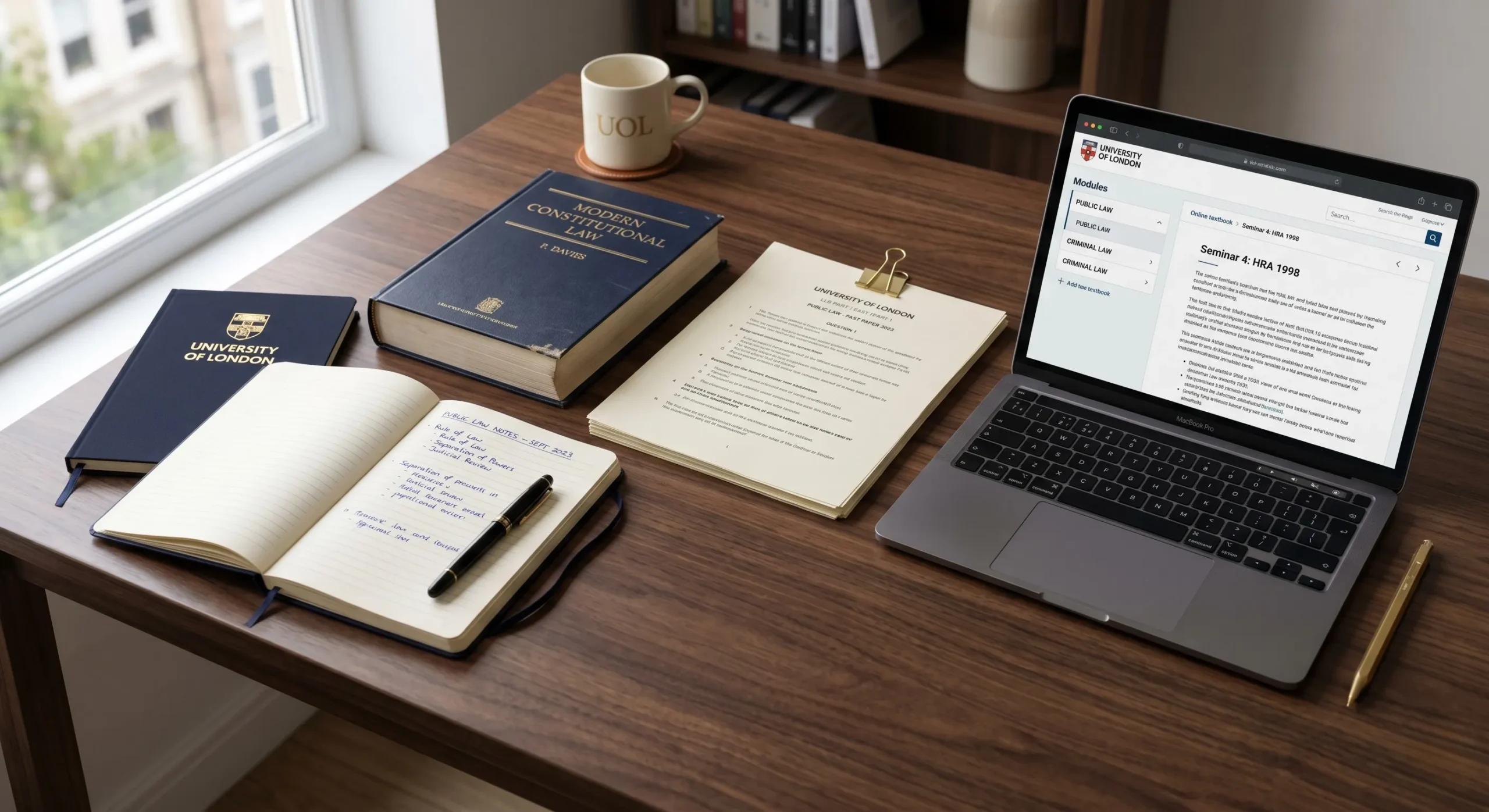
The University of London offers an independent study law degree that allows students to register, study, and sit exams from anywhere in the world. You study independently using the official subject guides, recommended textbooks, and past papers provided by the university.
The degree is academically equivalent to an LLB earned on campus in London. The same examiners set and mark the papers. The same standards apply.
The 8 Core Subjects
The LLB consists of six compulsory subjects and two optional subjects. The six compulsory core subjects are: Public Law, Criminal Law, Elements of the Law of Contract, Law of Tort, Property Law, and Jurisprudence. The two optional subjects are chosen from a list that includes EU Law, Trusts Law, Islamic Law, and several others.
Most students sit two to three subjects per examination session. The full degree typically takes three to five years to complete, though this varies depending on your pace and circumstances.
How the exams work
Each subject is assessed by a three-hour unseen written examination. There are no coursework submissions, no online assessments, and no multiple-choice components. Everything depends on how well you write under exam conditions in that three-hour window.
This is why exam technique matters so much. You are not assessed on how much you have read. You are assessed on how clearly and accurately you can construct a legal argument in a time-pressured environment.
The biggest challenge for independent students
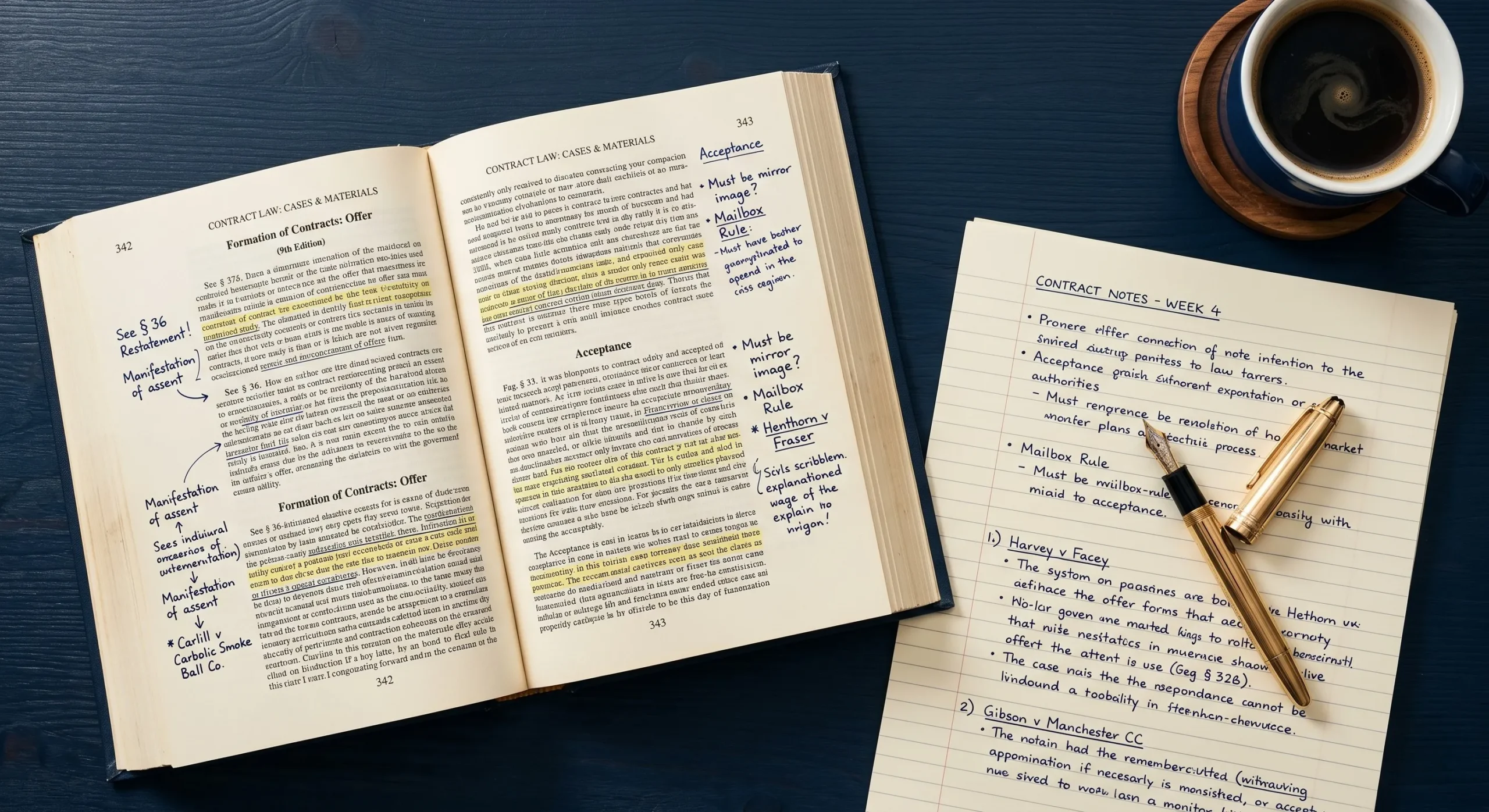
The official subject guides are thorough but they are not teaching documents. They list what you need to know — they do not explain how to apply it in an exam. Students who rely only on the subject guide often find themselves well-read but underprepared for the actual demands of the paper.
The examiners’ reports — published after each session — are one of the most valuable and underused resources available. They tell you precisely what the common errors were, what distinguished strong answers from weak ones, and what the examiners were looking for in each question. Reading three years of examiners’ reports for your subject is one of the highest-value revision activities available to you.
How to build your study plan
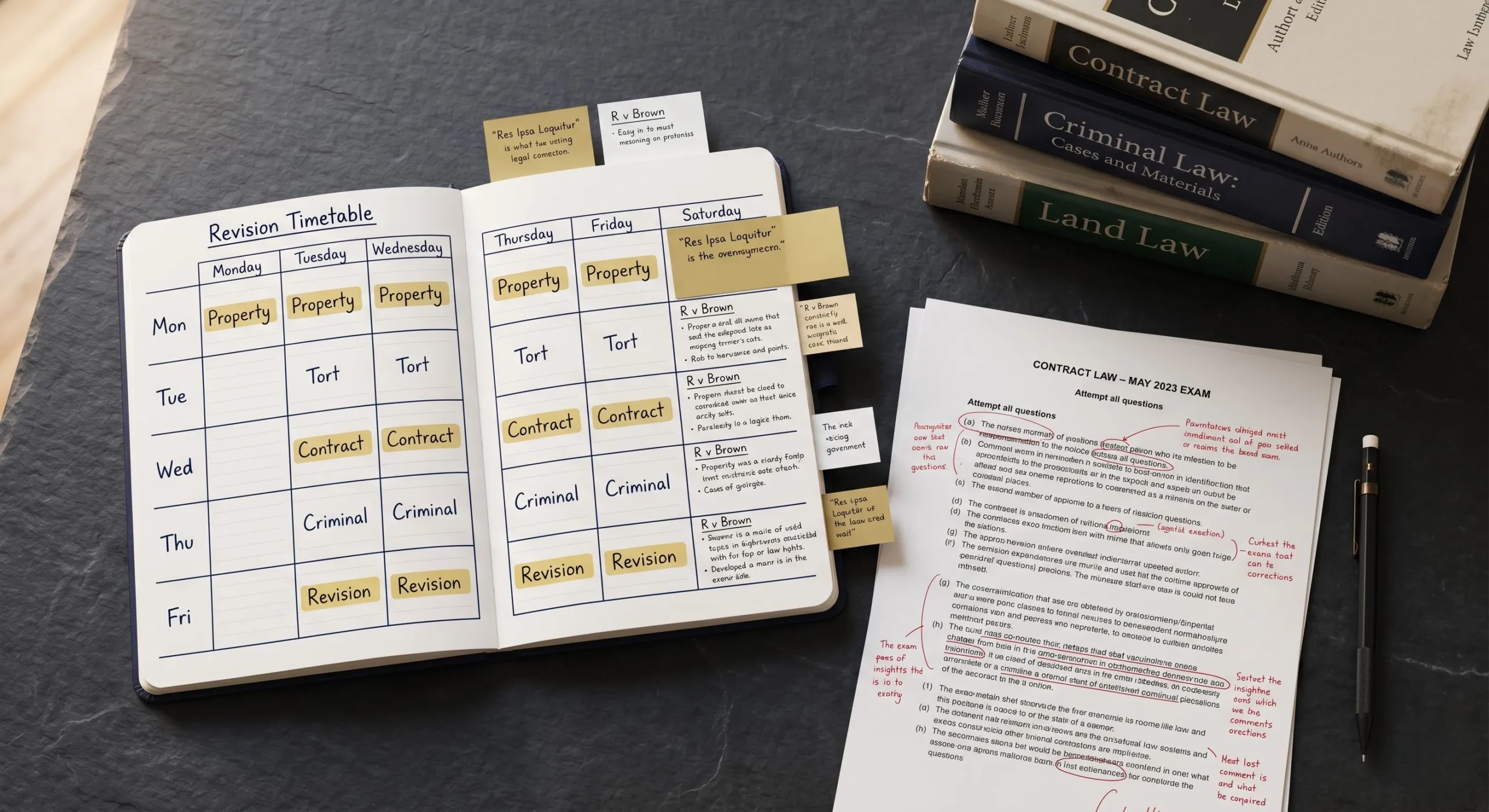
A structured approach looks like this: spend the first third of your study time building foundational knowledge of the key principles, cases, and statutes in each topic. Spend the second third working through past papers — reading the questions carefully, planning answers, and understanding the examiner’s expectations. Spend the final third on active recall, timed writing practice, and reviewing your weaker areas.
Do not leave past paper practice until the end. The earlier you expose yourself to exam-style questions, the better calibrated your revision will become.
Where to get structured help
Independent study does not mean studying entirely alone. Recorded lecture series, digital handbooks, and live tutorial sessions exist specifically to fill the gap between the official subject guides and what the examiners actually want.
If you are studying through Lexis Jurist, each module is designed to take you from foundational principles through to full exam readiness — covering every topic, every relevant case, and every type of question the examiners have set over recent years.
The University of London LLB is a serious, respected degree. Treat your preparation with the same seriousness and the results will follow.